You looked at the world's biggest organisations and saw the infrastructure they could put around their senior people.
On site gyms.
Healthy food.
Occupational health.
Performance support.
Flexible working.
Recovery spaces.
Entire environments designed to help people perform.
For a smaller business, much of that sounded great.
It also sounded completely unrealistic.
Not enough space.
Not enough budget.
Not enough internal resource.
And perhaps most importantly, it still felt like a nice to have.
I think that's changing.
Because the environment our senior leadership teams are being asked to operate in has changed.
AI is rewriting industries.
Competition is relentless.
Costs have increased.
UK businesses are carrying greater tax and employment pressure.
Customers expect more.
Communication rarely stops.
Decisions need to happen faster.
Uncertainty has become normal.
And sitting in the middle of all of that is usually a relatively small group of people.
The CEO.
Finance Director.
COO.
Sales Director.
Operations Director.
And perhaps another handful of senior leaders.
We talk constantly about whether the business has enough capacity to deal with what's coming.
But considerably less about whether the people running it do.
Because businesses don't absorb pressure.
People do.
And those people don't have unlimited capacity.
This is where I think the traditional conversation around workplace health misses something.
We notice the end of the process.
Burnout.
Long term sickness.
A health scare.
Someone being signed off work.
But deterioration can start years before any of that happens.
Sleep becomes slightly worse.
Weight gradually increases.
Blood pressure starts creeping up.
Energy becomes less predictable.
Recovery takes longer.
Training becomes inconsistent.
Patience under pressure isn't quite what it used to be.
The leader still turns up.
The meetings still happen.
The numbers still get reviewed.
The business continues operating.
So everybody assumes everything is fine.
Including the executive.
They compensate.
They push through.
They adapt.
And gradually a lower level of physical and mental capacity becomes normal.
That's Executive Health Drift.
And across a senior leadership team, its impact can compound.
One senior leader sleeping badly probably doesn't appear on a risk register.
Neither does another carrying an extra 15kg.
Or another relying on caffeine to remain sharp through the afternoon.
Or another whose blood pressure has been creeping upwards.
Or another who hasn't properly recovered from a relentless 18 months.
Individually, none of those things necessarily stops the business functioning.
But zoom out.
What happens when several of the people making your most important decisions are simultaneously operating below their best?
That's no longer simply an individual health issue.
It's an organisational capacity issue.
Because health influences the things businesses depend on those people to provide.
Energy.
Focus.
Decision making.
Resilience.
Patience.
Recovery.
Leadership under pressure.
That's why I increasingly believe we need to stop thinking about executive health purely as an employee benefit.
Health is the mechanism. Leadership Capacity is the business asset.
Executive Health Drift doesn't inevitably lead to burnout or long term sickness.
But sometimes it does contribute to a situation where a senior person can no longer continue working.
And that's when something interesting happens.
The organisation suddenly discovers just how dependent it was on that person's capacity.
Their responsibilities don't disappear when they do.
Somebody else picks them up.
Usually another senior executive.
Now that person is carrying their existing workload plus part of somebody else's.
Decisions may slow.
Projects move.
Customer relationships need managing.
Other leaders compensate.
If the absence continues, the company may need interim support or eventually a replacement.
There can be recruitment costs.
Interim leadership costs.
Employment and sick pay costs depending on the circumstances.
Lost organisational knowledge.
Disrupted relationships.
And months spent getting somebody else up to speed.
Some organisations have insurance arrangements designed to protect against certain forms of key person loss.
Others don't.
Either way, the question interests me:
Why are businesses comfortable protecting themselves financially against losing a key person, but invest comparatively little in protecting that person's capacity before they're lost?
This is where the SME argument becomes particularly important.
A multinational might have enormous executive health infrastructure.
But it also has enormous organisational depth.
A £10m, £20m or £50m company may have neither.
Instead, a huge amount of responsibility can sit with six or seven people.
The CEO.
The FD.
The COO.
A couple of divisional directors.
Perhaps one or two other key people.
They hold the relationships.
The knowledge.
The decision making.
The commercial experience.
The culture.
The ability to respond when something goes wrong.
Lose one and the impact can be substantial.
Have three or four gradually operating below their previous capacity and the impact is much harder to see.
That's the part of Executive Health Drift I think businesses should be paying attention to.
This is where the opportunity has changed.
A business doesn't need to build a gym.
It doesn't need a corporate campus.
It doesn't need a full time performance department.
And it certainly doesn't need Google's budget.
Executive health infrastructure can now effectively sit outside the organisation.
Senior leaders can have individual assessment.
Personal strategy.
Health markers.
Training.
Nutrition.
Sleep and recovery support.
Coaching.
Accountability.
All designed around the realities of carrying a senior leadership role.
That makes proactive executive health accessible to organisations that historically couldn't justify building it themselves.
I've worked with business owners and senior executives for around a decade.
For much of that time, I felt like I was trying to convince people why being proactive about health mattered.
The conversations I'm having now feel different.
I'm increasingly hearing:
“My board needs to hear this.”
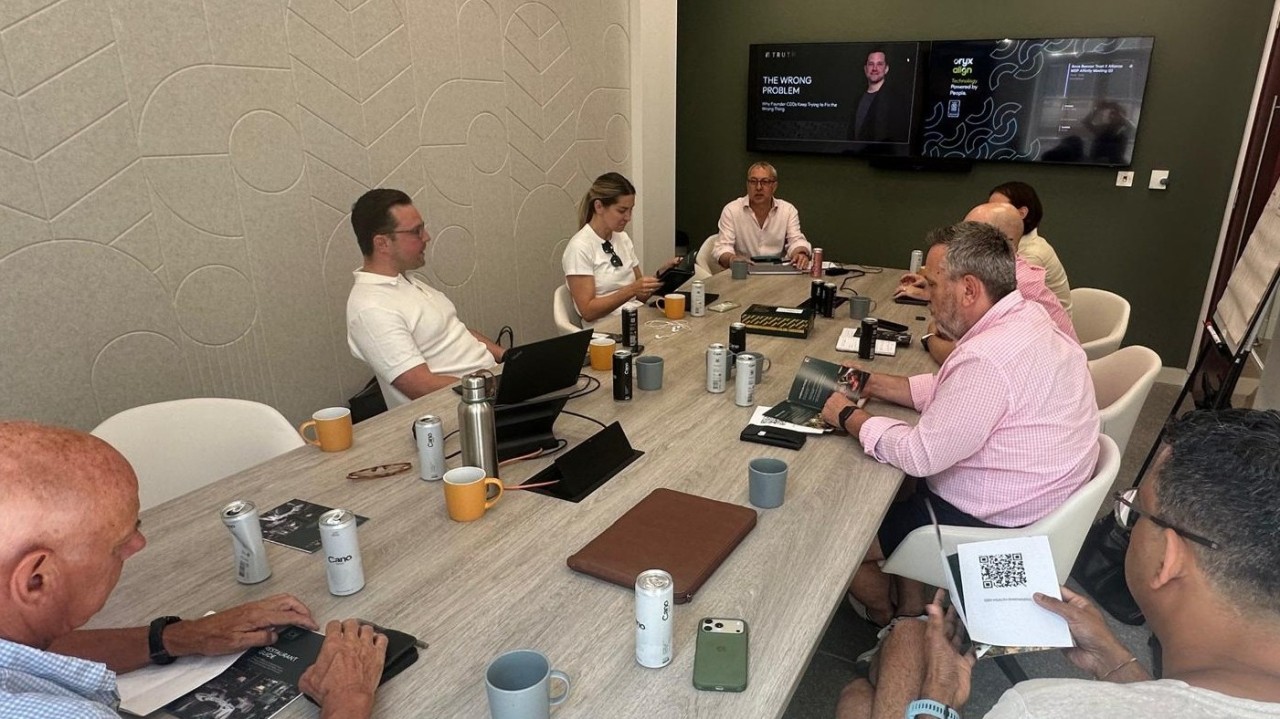
“Could you present this to our leadership team?”
“I've got four senior executives who would benefit from this.”
That's an important shift.
Because the conversation is moving away from:
“Should we offer people some wellbeing support?”
towards:
“How do we protect the capacity of the people this business depends on?”
Those are completely different conversations.
The second belongs in the boardroom.
I don't think smaller businesses need to copy the world's biggest corporations.
They can't.
And they don't need to.
But I do think we need to reconsider the assumption that the health of a senior leadership team sits entirely outside business performance.
We protect cash.
We protect data.
We protect buildings.
We protect systems.
We insure against key person risk.
We invest heavily in technology and infrastructure because the business depends on them.
Yet in many SMEs, some of the most critical infrastructure is still the physical and mental capacity of a relatively small senior leadership team.
Historically, we've largely waited until something goes wrong before acting.
I think that is changing.
Because in an increasingly demanding operating environment, protecting Leadership Capacity isn't a perk.